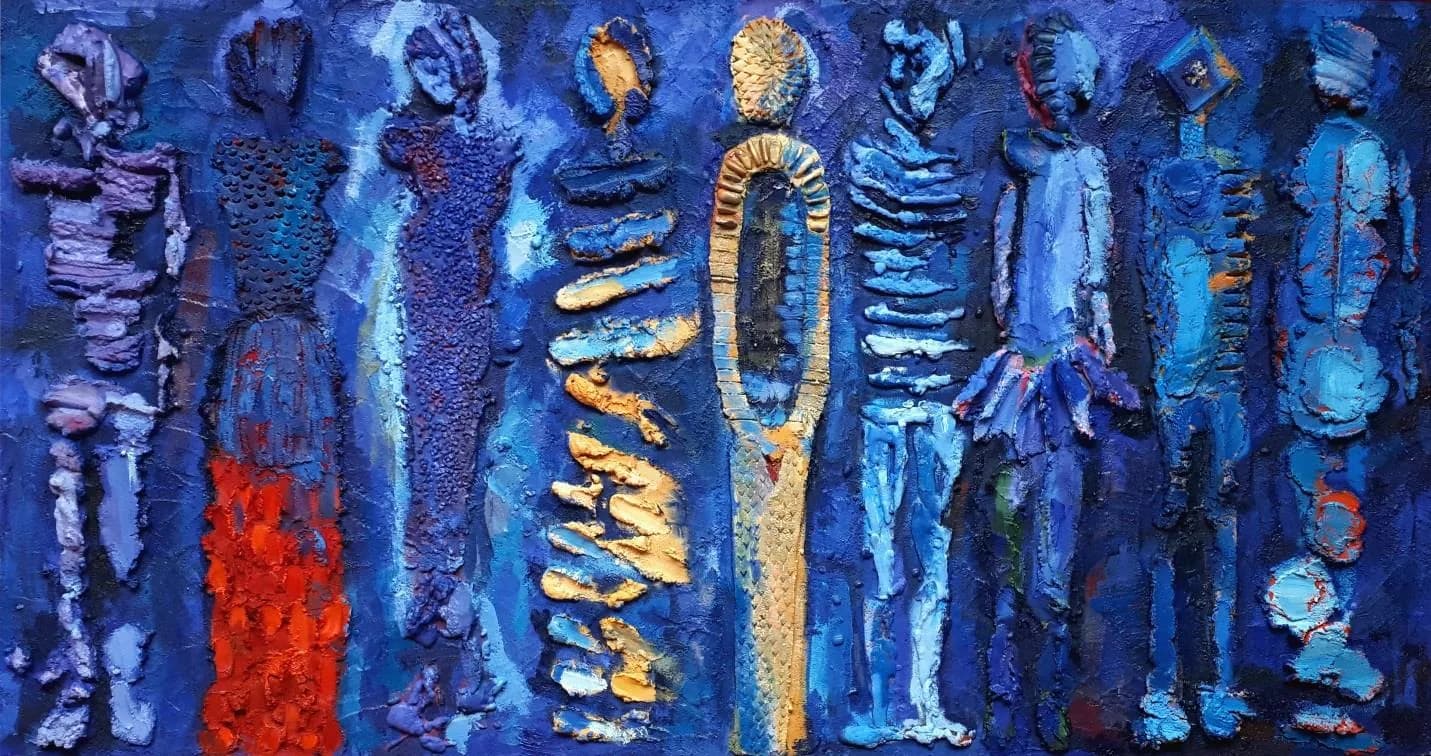
Byzantine Warriors #11
120 × 60 cm · 2019
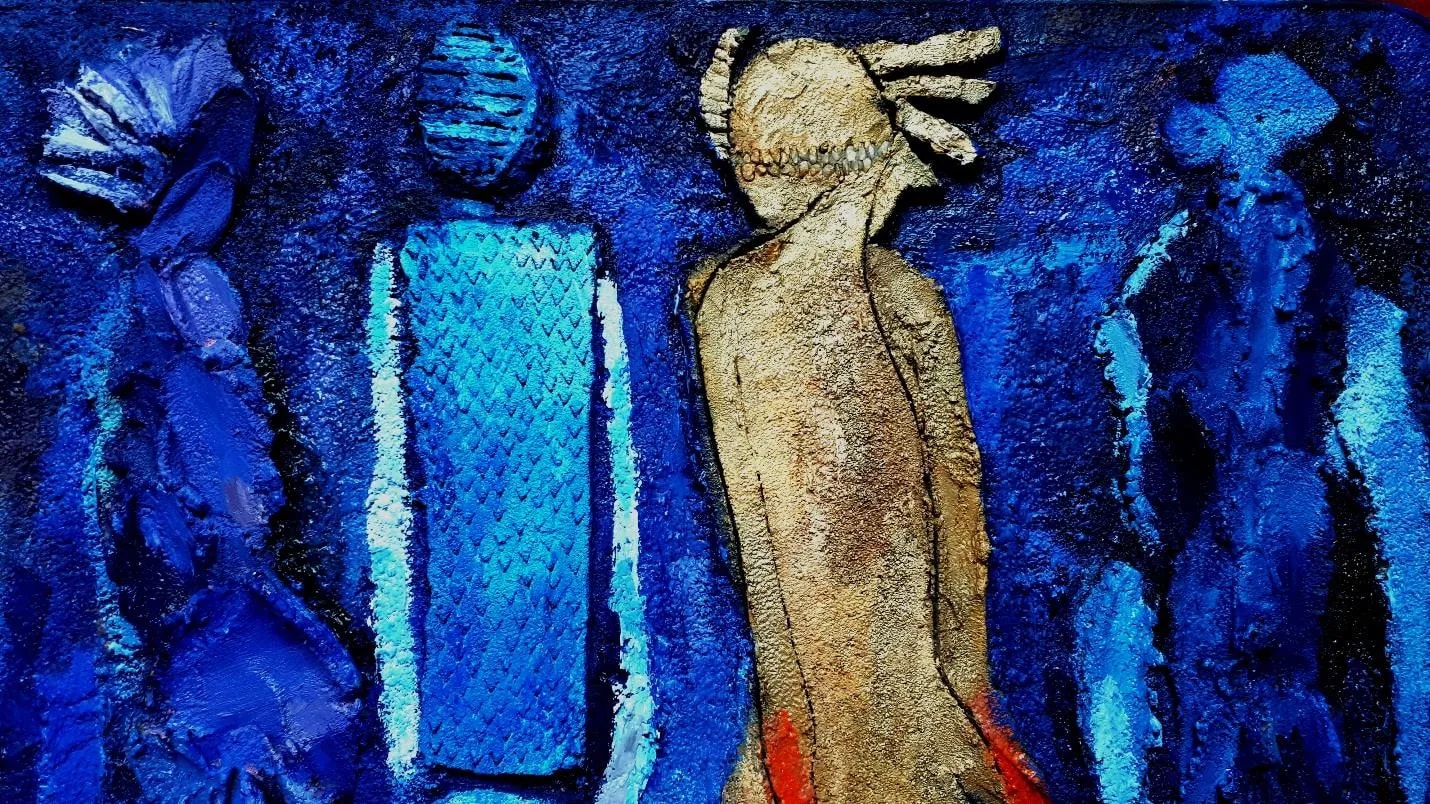
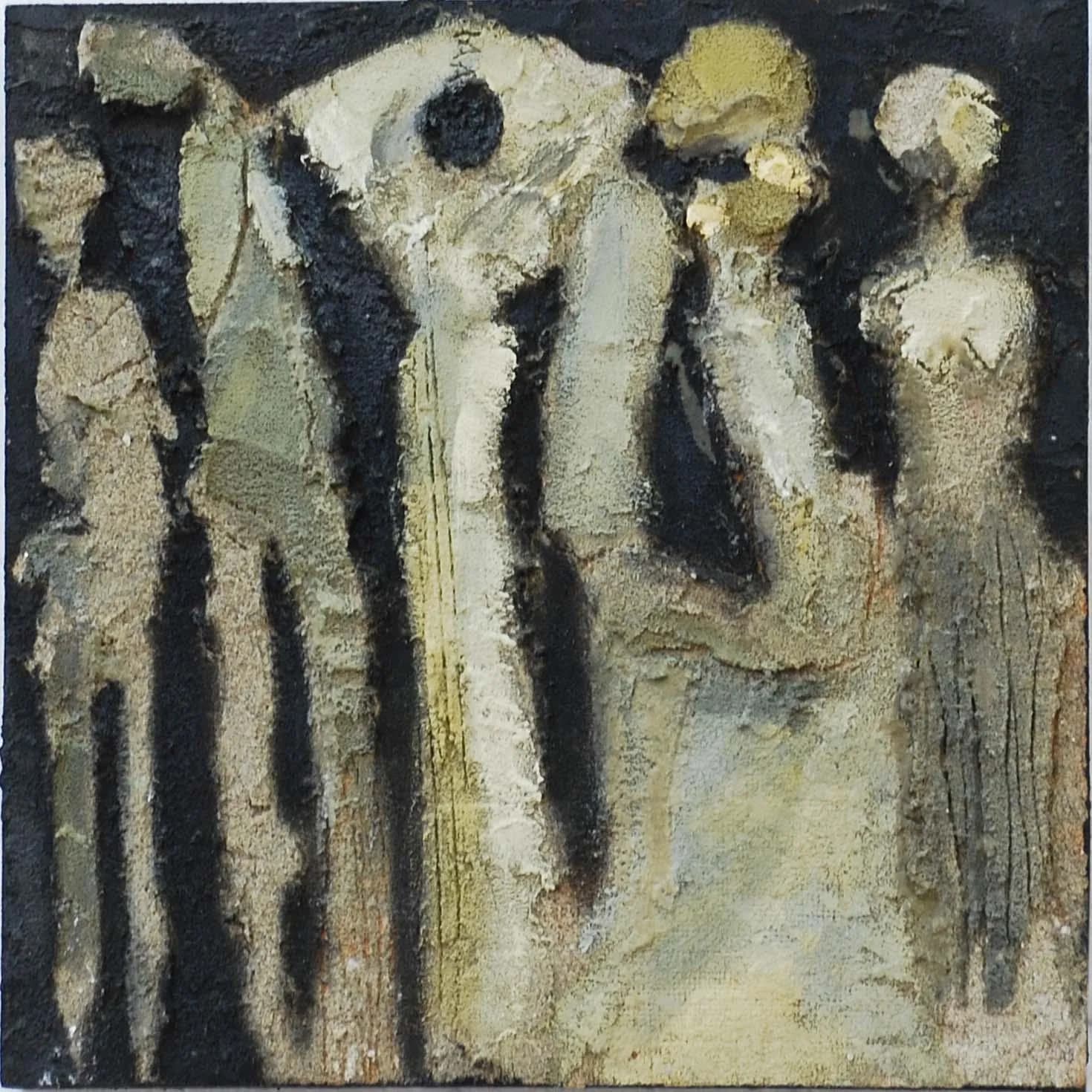
Oil on sand names a group in which colour and grain work together, between painterly density and mineral presence. Byzantine Warriors #9, #11 and #3, together with The Sleepers #13, are its catalogue landmarks. Made between 2007 and 2019, these works join the continuity of paint to a surface that never reads as a mere background. Matter gives figures and forms a sensitive depth, attentive to shifts in light and viewing distance.
This group of works approaches oil on sand as a field of attention rather than a fixed recipe. oil paint and sand give the images their physical presence, while each work retains its own tempo and scale. The catalogue makes it possible to follow a line of research through distinct paintings and dates, without reducing them to a single effect.
The material is part of what the viewer reads. It catches or absorbs light, creates a density, and makes the surface active from a distance as well as at close range. Here, matter does not illustrate a subject: it establishes the conditions in which forms, traces and intervals can emerge.
Byzantine Warriors #9, Byzantine Warriors #11, Byzantine Warriors #3 and The Sleepers #13 provide several points of entry into this vocabulary. Their titles should be read as individual landmarks, not as a closed sequence. Together they show how a recurring material can move between concentration, openness, contrast and reserve.
The dates from 2007 to 2019 make it possible to read the continuity of a material that receives colour, grain and depth together. The resulting rhythm comes from relationships: between a dense area and a quieter one, between an edge and a field, between an immediate mark and a slower looking time. This is why the paintings reward a viewing that moves back and forth rather than a quick reading.
Light changes the reading of the work without changing its identity. Depending on the angle, the surface can appear matt, granular, compact or more open. Colour is not simply added on top; it organises the spatial tension of the image and gives each painting its particular temperature.
Seen together, these works reveal variation as an essential part of the practice. A similar medium does not produce identical images. It allows differences of scale, framing, intensity and silence to become visible, so that every work remains autonomous while contributing to a wider body of research.
The dates in the catalogue matter because they keep the work in time. They do not force a linear story, but they allow continuities and returns to be noticed. A material can be taken up again years later with another intensity, while a title can preserve the trace of a thought, an encounter or a moment of looking.
Composition is never separated from material. The distribution of a dark area, a vertical, a gap or a colour changes the force of the surface. What appears spontaneous is held by decisions of balance. The works are therefore attentive both to movement and to the pauses that give movement its measure.
Rather than naming a fixed subject, this technique builds an open vocabulary. It can suggest figures, landscapes, interiors or states of mind without turning them into illustration. The viewer is invited to follow associations, to linger on the material facts of the painting, and to let the image remain available to several readings.
Each record gives an occasion to return to a single work after viewing the group. Dimensions, date, title and image provide useful points of orientation, while the technique page preserves the relation between them. This alternation between the individual piece and the wider selection is central to understanding the work as a living archive.
The technique page offers a practical way to compare these works in the catalogue. It brings together paintings made with related materials and lets the viewer notice what changes from one piece to the next: a concentration of matter, a shift in colour, a different balance of forms, or the space left for the eye to rest.
This selection is therefore not a technical inventory. It is an invitation to observe how a material language develops through individual works, and how each title, date and surface contributes to the continuing movement of the artist’s painting.
120 × 60 cm · 2019
59 × 79 cm · 2019
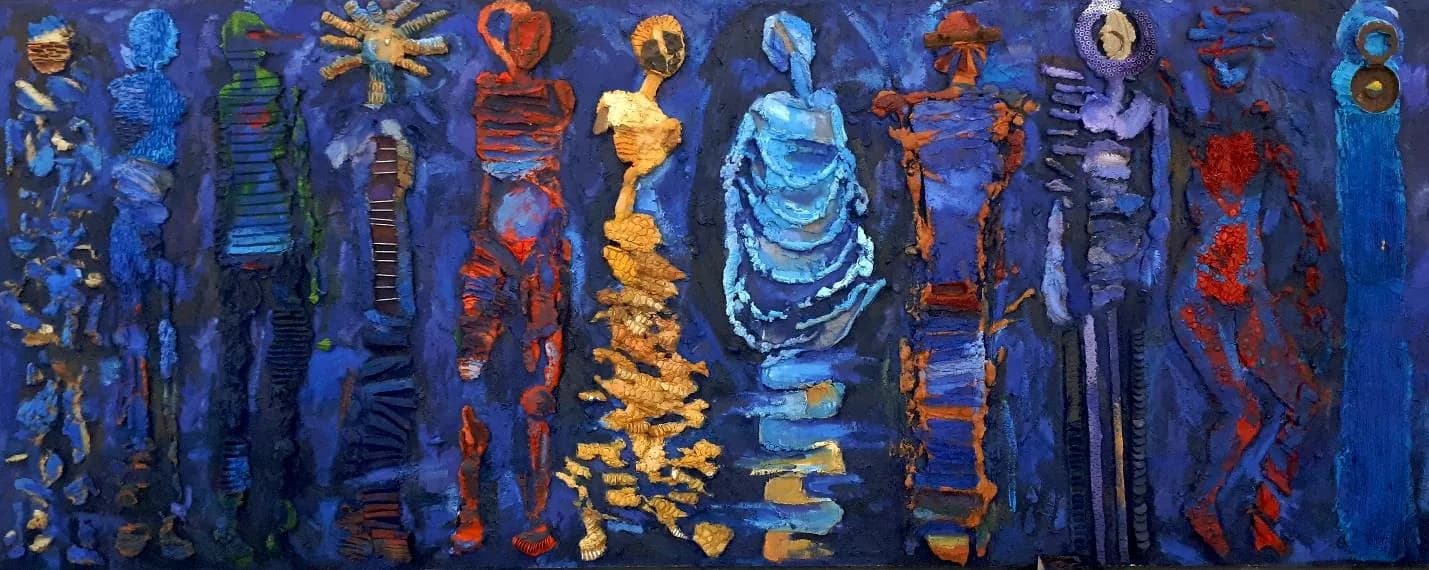
110 × 260 cm · 2019
30 × 30 cm · 2007